
After climbing to a record high of Rs 523 on September 30, shares of commodity major Vedanta have come off over 15 per cent amid a fall in the overall markets. The Anil Agarwal-led firm's latest slump comes after its stock price doubled over the past one year. Is it a blip or a trend reversal?

State Bank of India (SBI), India's largest lender, is looking to raise Rs 10,000 crore through 15-year infrastructure bonds as early as next week, said multiple sources aware of the development. Market participants expect a coupon in the range of 7.15-7.18 per cent for SBI's upcoming infrastructure bond issuance. This comes as demand for longer-tenor papers has remained strong in recent domestic capital market offerings.

After a brutal selloff since October, foreign portfolio investor (FPI) flows for the year-to-date (YTD) in 2024 have turned negative. In early September, YTD FPI investments peaked at a record Rs 22,000 crore ($2.6 billion). This wave of selling has also pulled down benchmark indices, with the Nifty's YTD returns declining to 11 per cent from their high of 21 per cent in September.

Even as the high inflation figure for October has ruled out any possibility of a rate cut by the Reserve Bank of India's (RBI's) monetary policy committee (MPC) in December, a rate cut in February also looks uncertain due to global uncertainties. Economists told Business Standard that unless domestic growth slows markedly, the outlook on rate cut remains unclear. India's headline inflation touched a 14-month high of 6.2 per cent in October, breaching the MPC's upper tolerance band of 6 per cent.

'The problem is that the bubble may not only be in valuations, but also in investors' minds.'

The calendar year 2024 is set to go down as the best year for initial public offerings (IPOs) in terms of funds raised. Following the IPOs of food delivery major Swiggy and two other companies slated for next week, this year's total will reach nearly Rs 1.2 trillion, going past 2021's record tally of Rs 1.19 trillion. Swiggy's Rs 11,327 crore IPO, the sixth-largest in India, and solar energy firm Acme Solar Holdings' Rs 2,900 crore IPO opened on Wednesday (Nov 6), while health-tech firm Sagility India's Rs 2,106 crore IPO opened a day earlier.

Foreign investors were net sellers of domestic debt in October for the first time since the official inclusion of Indian government bonds in the JP Morgan bond indices, with net outflow worth Rs 4,697 crore. This marked the second instance in the current calendar year where foreign portfolio investors (FPIs) were net sellers in a month.

The advance/decline ratio (ADR) - a gauge of market breadth - has remained negative (below 1) for a second consecutive month. In other words, the number of stocks declining is outpacing those rising, as a brutal selloff by overseas investors and lofty valuations weigh on sentiment. According to BSE data, the ADR for October stands at 0.98 for the second month in a row.

'The economy is clearly at a very soft spot, and earnings growth is disappointing every day.' 'After three great years, the Indian economy has hit a rough patch.'
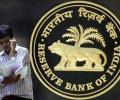
The Reserve Bank of India (RBI) was a net seller of the US dollar in August, reversing its net buying position from July. During the current financial year up to August, the central bank had sold a net $1.11 billion. The RBI sold a net total of $6.49 billion worth of the foreign currency in August, according to the central bank's monthly bulletin.

Foreign portfolio investors (FPIs) have net sold domestic shares worth over $10 billion so far this month amid a shift to China, which not only offers attractive valuations compared to India but has also announced several measures to support the economy and the stock market in recent weeks. If the trend doesn't reverse, this will be the first time that overseas funds will yank out more than $10 billion from Indian equity markets in a month.

After depreciating 0.32 per cent against the dollar in October so far, the rupee is expected to hold ground against the greenback in the current quarter on the back of robust inflows. According to the median of a Business Standard poll of 10 respondents, the rupee is seen trading around 84 per dollar till the end of December. "In India's case, at least the bond and cash related inflows will continue.

On a five-day rolling basis, FPI selling is the highest in 24 years.

The rupee remains overvalued against the currencies of India's trading partners, even as it hit record lows against the dollar in August and September. According to the Reserve Bank of India's (RBI) real effective exchange rate (REER) index, the rupee stood at 5.5 per cent above its fair value in August, down from 7.7 per cent in July. This slight easing followed fears of a US recession and the unwinding of yen carry trades, which exerted pressure on the Indian currency.

IPOs worth Rs 50,000 crore including Hyundai, NTPC Green Energy and Swiggy are set to hit the market in late October or early November.

Banks have issued Rs 7.78 trillion worth of CDs in the current calendar year until August 2024, compared to Rs 4.9 trillion in the same period of 2023, registering a 59 per cent growth

'IPOs have performed exceptionally well, with a notable increase in average ticket size from Rs 800 crore in the last financial year to around Rs 1,300 crore in this financial year.'

A number of non-banking financial companies (NBFCs) have tapped into the debt capital market ahead of the festival season to meet increasing credit demand as bank funding slows. On Tuesday, Aptus Value Housing Finance secured Rs 300 crore at an interest rate of 8.75 per cent through bonds maturing in five years. ICICI Home Finance Company turned to the market to raise Rs 275 crore at 7.94 per cent, alongside another Rs 300 crore at 7.95 per cent, through bonds maturing in five and three years, respectively.

The liquidity will move into deficit after advance tax payments and GST outflows. It will rebound in October because of government spending.

In order to boost its deposit base, State Bank of India (SBI) is focusing on various segments, including JanDhan account holders, trusts, societies, and the segment below the affluent class but above the normal account holders. According to Ashwini Tewari , managing director, SBI, the bank is focusing on three broad segments. One is wealth banking, where the bank is focusing on individuals who perhaps do not qualify for private banking but are above regular accounts and require individual attention.
 © 2026 Rediff.com - Advertise with us - Disclaimer - Privacy Policy - Sitemap - Feedback - About us - Terms of use - Grievances